
Large demonstrations took place in London as supporters attending the United Kingdom rally and groups participating in pro-Palestinian and anti-racism marches gathered in different parts of the city under a significant police presence.
Authorities had spent days preparing for the events, with officials emphasizing that separate routes and security measures would be used to minimize direct contact between opposing groups. The Metropolitan Police, city officials, and organizers repeatedly stressed the importance of maintaining public order throughout the day.
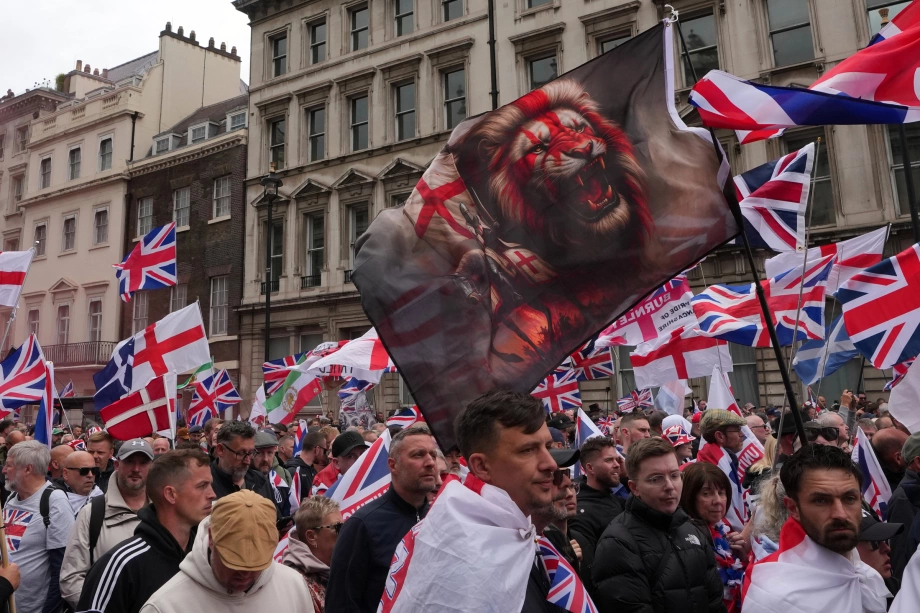
Despite those preparations, tensions remained high as various reports emerged suggesting that some protesters attempted to move closer to rival demonstrations. Videos circulating online showed crowds chanting slogans while journalists on the ground described an increasingly charged atmosphere as the day progressed.
For many observers, the simultaneous demonstrations highlighted the deep political and social divisions currently visible across Britain. While participants on each side described their actions as peaceful expressions of political belief, the presence of opposing groups inevitably drew attention and concern from authorities.
Throughout the day, police officers monitored movement between the different gatherings. Officers were stationed at key locations across central London, with barriers and crowd-control measures deployed to keep groups separated and reduce the risk of confrontation.
One incident that attracted significant attention involved the arrest of a protester dressed as the Grim Reaper. Images and video footage of the arrest quickly spread online, prompting debate over the limits of political expression and the role of police in maintaining public order during highly charged demonstrations.

The arrest became one of several moments that fueled discussion across social media platforms, where users argued over whether enforcement actions were being applied consistently. As is often the case during large-scale protests, differing interpretations emerged almost immediately.
Earlier statements from organizers had also focused on concerns surrounding face coverings and identification. Participants were warned that law enforcement would be using extensive surveillance resources, including technology capable of assisting with facial recognition and evidence gathering.
Reports later indicated that multiple arrests had been made during the operation. According to police updates released during the day, dozens of individuals were detained across the broader policing effort connected to the demonstrations.
Officials emphasized that, despite the number of arrests, the events had proceeded largely without major incidents. Authorities described the overall operation as manageable given the size of the crowds involved and the potential for conflict between opposing groups.
Another widely shared video appeared to show a female police officer facing hostility from some demonstrators while carrying out her duties. Footage suggested fellow officers moved to support her as tensions briefly escalated near a barrier line separating protesters.
The clip sparked considerable online discussion, with commentators debating both the circumstances surrounding the confrontation and the challenges officers face when policing emotionally charged political demonstrations.
Media coverage of the events also became part of the story itself. Several broadcasters attempted to interview participants at the marches, with mixed results. Some protesters declined to speak with journalists, while others openly questioned the outlets conducting the interviews.
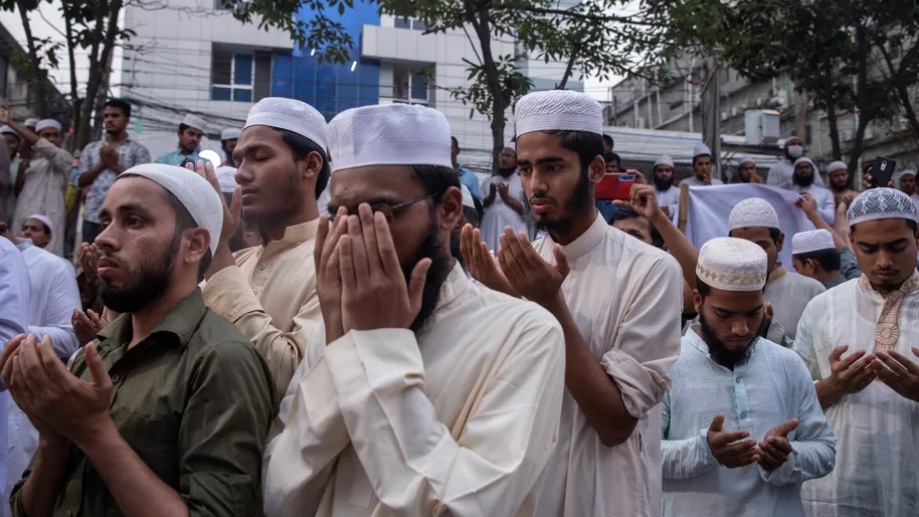
One exchange that attracted attention involved a reporter seeking comments from participants attending a pro-Palestinian demonstration. Several individuals refused to engage, citing distrust of the media organization involved, while others agreed to explain their reasons for attending.
Those willing to speak emphasized concerns about the ongoing conflict in the Middle East and argued that public demonstrations remain an important method of expressing solidarity and raising awareness. Their comments reflected the broader themes that have motivated repeated protests across Britain over recent months.
At the same time, critics argued that some slogans and chants heard during the demonstrations crossed lines that authorities should address more aggressively. Videos shared online prompted renewed debate about free speech, public safety, and the responsibilities of organizers.
Observers also noted differences in policing perceptions. Some commentators argued that certain events appeared to receive heavier police attention than others, while supporters of the police response maintained that deployment decisions were based on operational assessments and crowd-management requirements.
As the day continued, social media platforms became flooded with clips, photographs, and competing narratives from attendees, journalists, activists, and political commentators. Each side pointed to different moments as evidence supporting its view of how the demonstrations unfolded.
By the evening, the overall picture remained one of a city hosting multiple large-scale political gatherings under intense scrutiny. While arrests were made and tensions occasionally surfaced, authorities maintained that the demonstrations had largely proceeded without the widespread disorder many had feared.
The events are likely to remain the subject of political debate in the coming days as supporters and critics analyze both the conduct of demonstrators and the response from law enforcement. With public opinion deeply divided on many of the issues raised during the marches, the discussion surrounding the protests appears far from over.


